


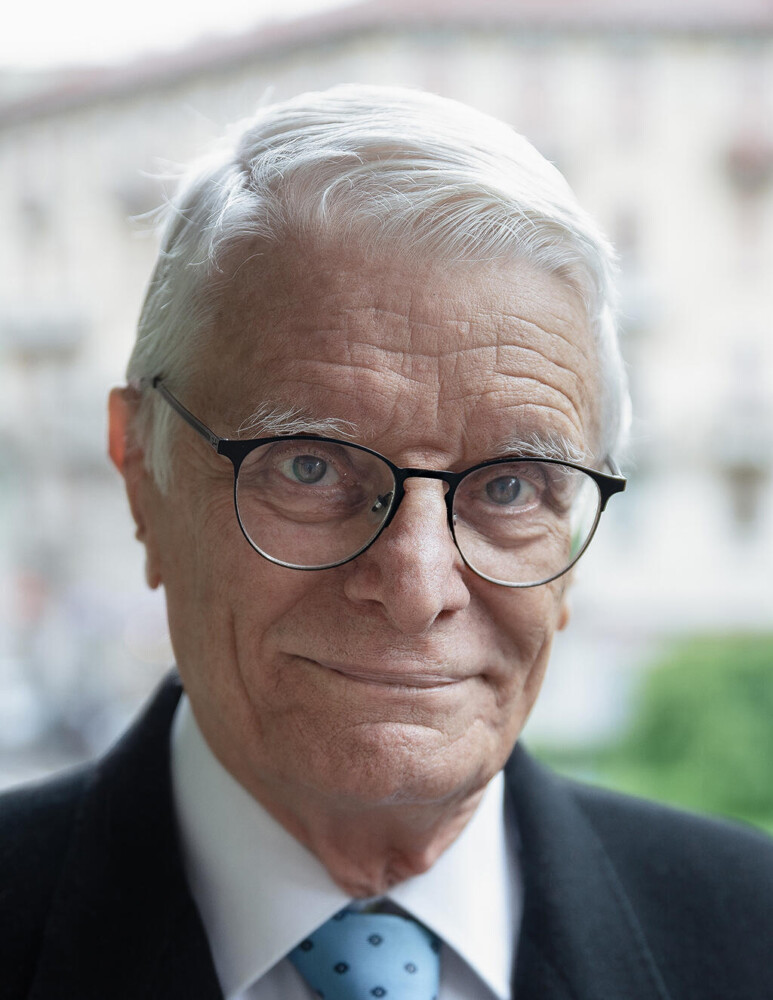
On January 1st, Professor Claudio Ponticelli passed away in Milan at the age of 89. He was a nephrologist of renowned international fame and an essential point of reference for generations of Italian nephrologists. Until his final moments, despite an inevitable physical decline – though never an intellectual one – he dedicated his energies to the progress of our discipline. He actively participated in scientific congresses, offering his example and experience to new generations of nephrologists and continuing his scientific production, with some of his contributions set to be published posthumously.
The professional journey of Prof. Ponticelli and his scientific contributions constitute a milestone in the history of Italian nephrology. Gifted with extraordinary analytical sharpness and a far-sighted vision, he was able to anticipate the evolution of our discipline with tenacity and dedication, becoming a reference point not only nationally but also internationally.
Beyond his undisputed academic value, Professor Ponticelli was distinguished by his integrity and intellectual freedom – characteristics he maintained with dignity even in the face of the inevitable adversities that can occur throughout one’s personal and professional life. His actions were constantly guided by the ethics of care and the conviction that excellence in healthcare must be a guaranteed right for every patient.
A staunch supporter of cooperation between specialists, he promoted spontaneous randomized trials that raised standards of care and the sharing of knowledge. In recent years, while no longer able to engage in direct clinical activity, he turned his interest toward more speculative areas of research while simultaneously continuing to provide seminal contributions to the topics closest to him – particularly glomerulonephritis and the management of immunosuppressive therapy in kidney transplant patients.
Although public recognition was not always proportional to his actual worth, Prof. Ponticelli’s influence remains alive through his numerous scientific publications that have trained generations of physicians. His vast scientific (over 650 publications in international journals) output embraced the entire spectrum of glomerular pathology; in particular, his fundamental contribution to the study of membranous nephropathy is remembered, with the reference therapeutic protocol still bearing his name today, alongside research on minimal change disease, focal sclerosis, and IgA deposits and Lupus Nephritis.
Preserving his legacy is therefore an essential duty today, to safeguard that union of scientific rigor and profound humanity that he masterfully embodied throughout his entire career.
“May the earth rest lightly upon him”